Picture this: you spend the morning chatting in Spanish over coffee, the afternoon walking through green mountain paths, and the evening ordering dinner with a little more ease than you had the day before. That is why so many people want to learn Spanish in Spain, adult-style – not by going back to school, but by stepping into daily life and actually using the language.
For adult learners, that difference matters. You are not looking for worksheets for the sake of it. You want Spanish that helps you ask questions, join conversations, understand what is going on around you, and feel part of the place rather than a spectator in it. Spain offers that in a way few destinations can, especially when the learning is built around real experiences instead of long classroom days.
Why learn Spanish in Spain as an adult?
Adults tend to learn best when there is a reason behind every lesson. You remember vocabulary more easily when you use it to buy bread, follow a walking route, ask about a local festival, or chat with your host over breakfast. That is the advantage of learning in Spain. The language is not trapped in a textbook. It is all around you.
There is also a confidence factor that often gets overlooked. Many adult learners understand more Spanish than they think, but freeze when it is time to speak. Being immersed in the language every day helps remove that hesitation. You stop waiting for the perfect sentence and start communicating. That shift is often where real progress begins.
Of course, not every immersion holiday is equal. Some programmes promise a Spanish experience but still keep learners in a bubble, surrounded mainly by other English speakers. Others focus so heavily on grammar that the joy disappears. The sweet spot is structure plus real life – guided teaching, yes, but also movement, culture, conversation, and enough breathing room to enjoy where you are.
What adult learners need that younger students often do not
Adult learners arrive with more life experience, but also more baggage. You may be worried about getting things wrong, embarrassed by your accent, or convinced you are too old to improve. The good news is that adult learning is not about speed. It is about relevance, repetition and comfort.
A good adult-focused course understands that. It does not rush people through content just to tick boxes. It gives you practical Spanish you can use straight away, space to ask questions, and a supportive atmosphere where speaking feels safe. Small groups help enormously here. So does learning with people who are travelling for similar reasons – curiosity, challenge, enjoyment, and the simple wish to do something enriching with their holiday.
That is one reason experience-led programmes work so well. If a lesson continues naturally on a village walk, over lunch, or during a cultural visit, the language begins to stick without feeling forced. It becomes part of the day rather than a separate task.
The best way to learn Spanish in Spain adults can sustain
The best approach is usually not the most intense one on paper. Four hours in a classroom may sound serious, but for many adults it is tiring and less effective by day three. Energy matters. Attention matters. Enjoyment matters too.
What often works better is a balanced rhythm. A focused lesson in the morning gives you new language and clear direction. A guided activity later in the day gives you a reason to use it. You hear Spanish in different voices, in different settings, and in a more natural tempo. That repeated exposure is powerful.
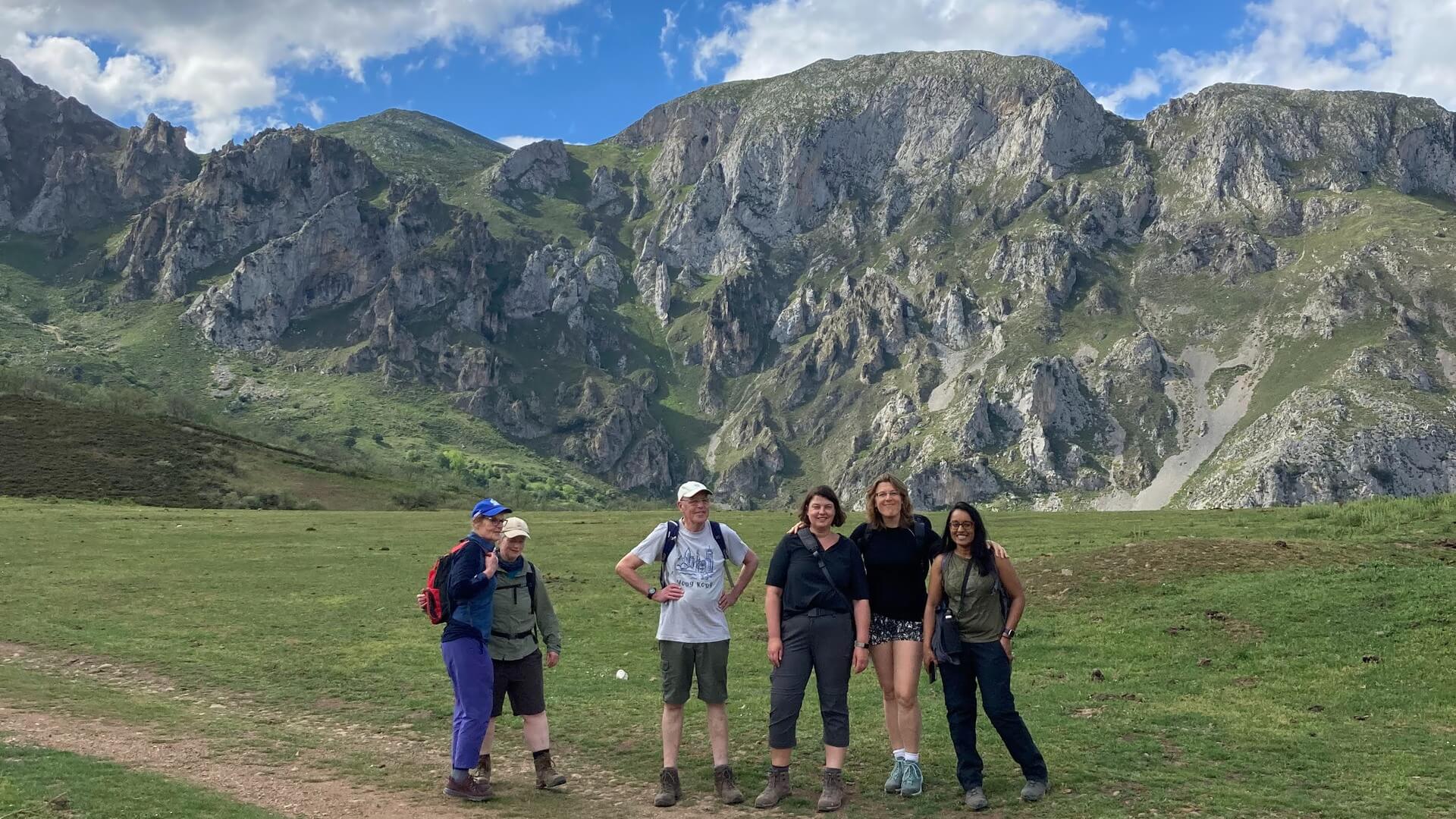
Walking programmes are especially good for this because movement changes the mood. People talk more easily side by side than face to face across a desk. Conversation flows. Pressure drops. You notice things, ask about them, and suddenly vocabulary is tied to a real memory – a trail, a market, a chapel, a hillside village. That is much easier to recall than a random list learned indoors.
Why location matters more than most people expect
When people picture learning Spanish in Spain, they often think first of Madrid, Barcelona or the usual coastal hotspots. Those places certainly have their appeal, but they are not always the easiest environment for relaxed immersion. Big cities can be noisy, rushed and full of English. Tourist resorts can make it surprisingly easy to avoid Spanish altogether.
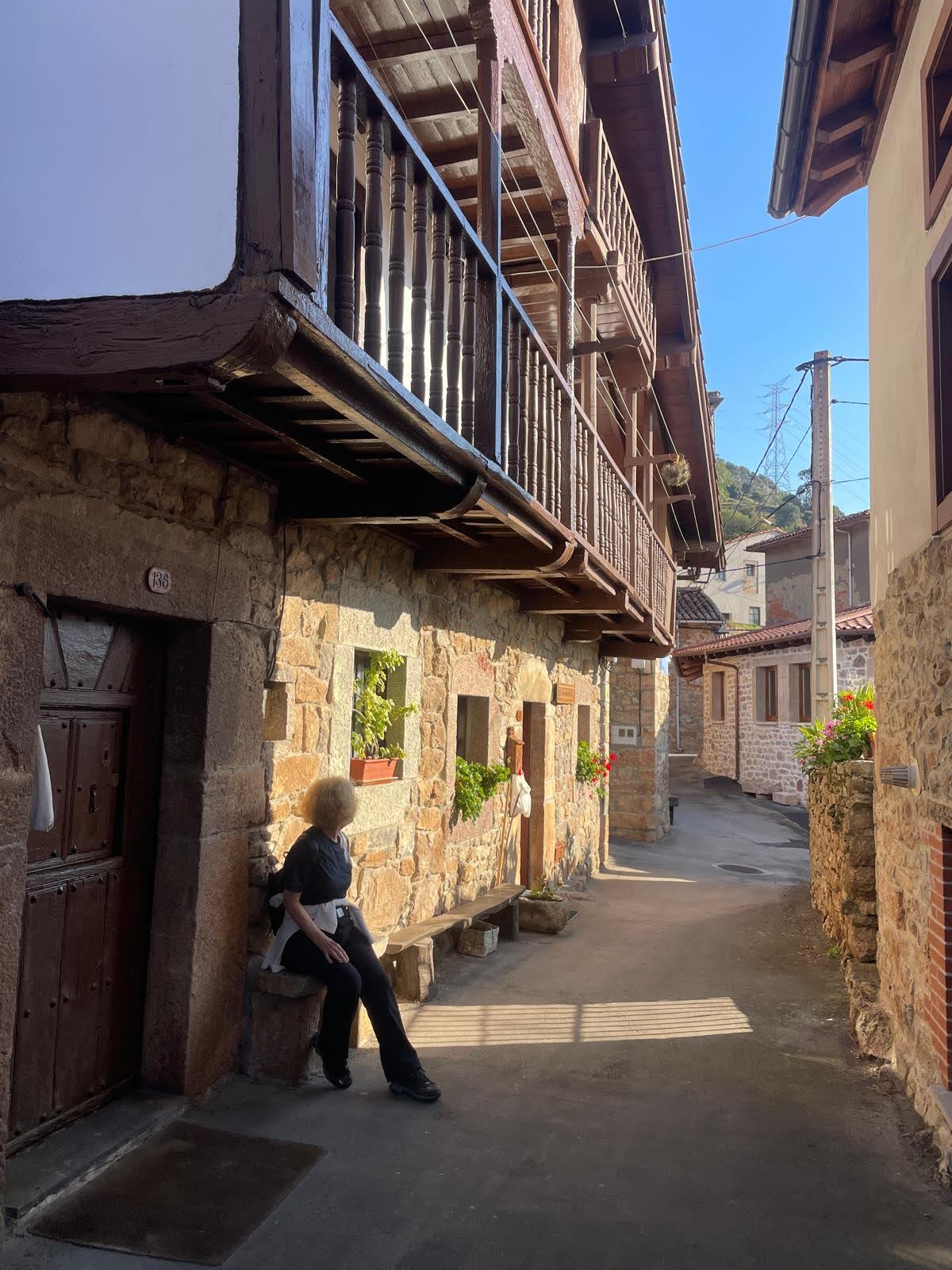
For many adult learners, a smaller destination offers something better: calmer surroundings, more personal contact, and a stronger sense of the real Spain. In northern Spain, for example, you get a very different rhythm. Green landscapes, mountain villages, local traditions and unshowy hospitality create the sort of atmosphere where people settle in quickly and start speaking without feeling self-conscious.
That setting also changes the holiday itself. You are not squeezing language lessons into a crowded city break. You are giving yourself time to learn well, sleep well, eat well and experience Spain more deeply. For people who want progress without burnout, that matters.
What to look for in a Spanish course for adults
If you are comparing options, look beyond the headline promise. Ask how much real conversation is included. Ask whether groups are small. Ask what happens outside class. A course designed for adults should make practical speaking central, not treat it as an extra.
Accommodation support is worth considering too. When travel, transfers and lodging are well organised, you can focus on learning rather than logistics. That is particularly valuable if you are travelling solo, which many adult learners do. A warm welcome and a clear structure can turn nerves into excitement very quickly.
It is also worth checking whether the programme suits different levels. Not every adult arrives with the same goals. Some want to rebuild rusty school Spanish. Others want to finally start speaking after years of apps and online lessons. Others are already conversational and want greater fluency and confidence. The best programmes meet people where they are and help them move forward at their own pace.
Learning through culture, not just lessons
One of the biggest pleasures of learning Spanish in Spain is that culture does half the teaching for you. Meals, local customs, regional history, street life, festivals, even the rhythm of greetings – all of it gives the language context.
This is where a language holiday becomes far more memorable than a standard course. You are not just learning how to conjugate a verb. You are learning when people actually use it, what tone sounds natural, and how conversation really unfolds. That cultural layer builds better instincts.
It also makes the experience richer on a human level. Many adults are looking for more than skill-building. They want connection, freshness and a break from routine. A well-designed Spanish holiday gives you all three. You come home with stronger language, yes, but also with stories, favourite places and the feeling that you have seen a corner of Spain properly.
A more thoughtful kind of travel
There is another point worth making. The best language holidays are not only good for learners. They can be better for places too. Smaller-scale programmes in less-touristed areas tend to spread the benefits of travel more responsibly and create more meaningful contact with local communities.
That matters if you care how you travel, not just where you go. Choosing a course that values low-impact activities, local knowledge and respectful immersion can make the whole experience feel more aligned. For many adults, especially those who travel consciously, that is no small detail. It is part of what makes the trip feel good from start to finish.
At PeakMe, that blend of practical Spanish, guided walking and life in the beautiful Spanish countryside is exactly the point. You are learning, but you are also breathing a bit deeper, moving your body, and discovering a part of Spain that still feels wonderfully real.
Is it worth it?
If your goal is to become instantly fluent after one trip, probably not. Language learning is cumulative, and one week will not do everything. But if your goal is to build confidence, speak more freely, improve your listening, and finally make Spanish feel alive, then yes – very much so.
For adults, the real value is often momentum. A good immersion stay shows you that you can do this. It breaks the habit of overthinking. It gives you a stronger ear, a bigger working vocabulary, and a more natural relationship with the language. From there, future learning becomes easier because Spanish is no longer abstract.
And perhaps that is the real appeal. To learn Spanish in Spain as an adult is not simply to study harder. It is to learn in a way that feels human, enjoyable and grounded in the world. If you choose the right setting, the language stops being a subject and starts becoming part of your day – and that is when it begins to stay with you.